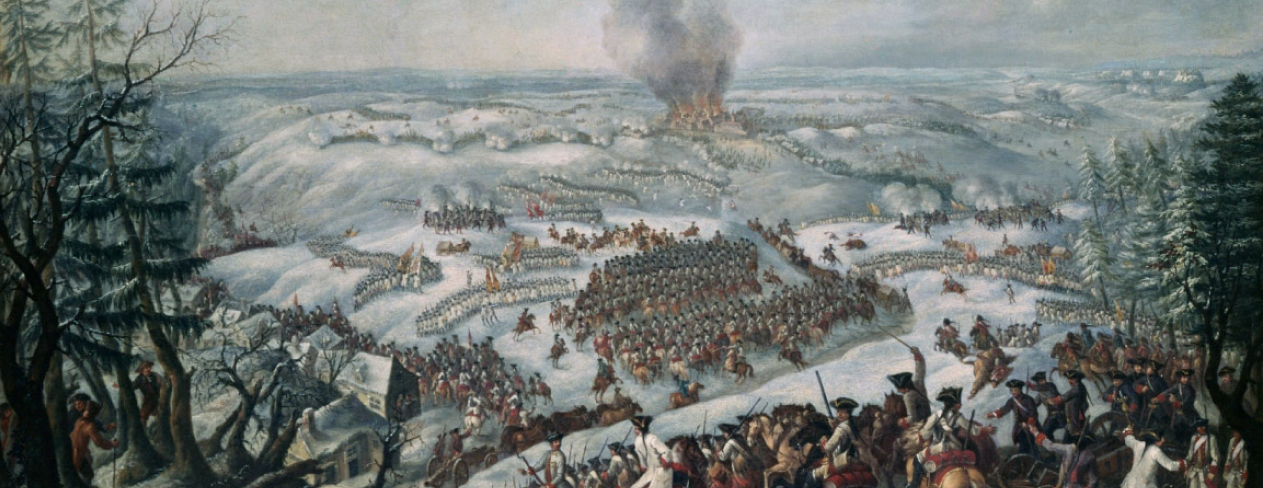
We have now arrived at what some might call the ‘boring’ part of historical fiction — the political and social realities that form the backdrop to the plot. A struggle for the balance of power forms the distant background of the narrative. For decades, Austria had relied upon Britain and Russia as its allies, viewing France and Prussia as its principal enemies.
In the 1740s, Prussia’s approach to Britain set off a kind of political domino effect. Urgently seeking a new powerful ally against Prussia, Maria Theresa succeeded in persuading Louis XV to reverse the existing alliances — a shift later known as the Diplomatic Revolution. In this delicate process, Austrian Ambassador Count Kaunitz was decisively supported by the King’s maîtresse-en-titre, Madame de Pompadour. As the third party, Czarina Elizaveta of Russia joined the new alliance, a move that prompted Frederick of Prussia, a well-known misogynist, to refer to them bitterly as the three most famous whores in Europe.
Nevertheless, on the global scale, the Austrian-Prussian conflict was only a secondary strand in the struggle for world power between France and Britain. With its hotspot in North America, the Seven Years’ War had an intercontinental reach and is sometimes described as the first world war.
Access to the Metatext via placing an order for an augmented product. See Terms of Use
We use cookies to ensure that we give you the best experience on our website. If you continue to use this site we will assume that you are happy with it.