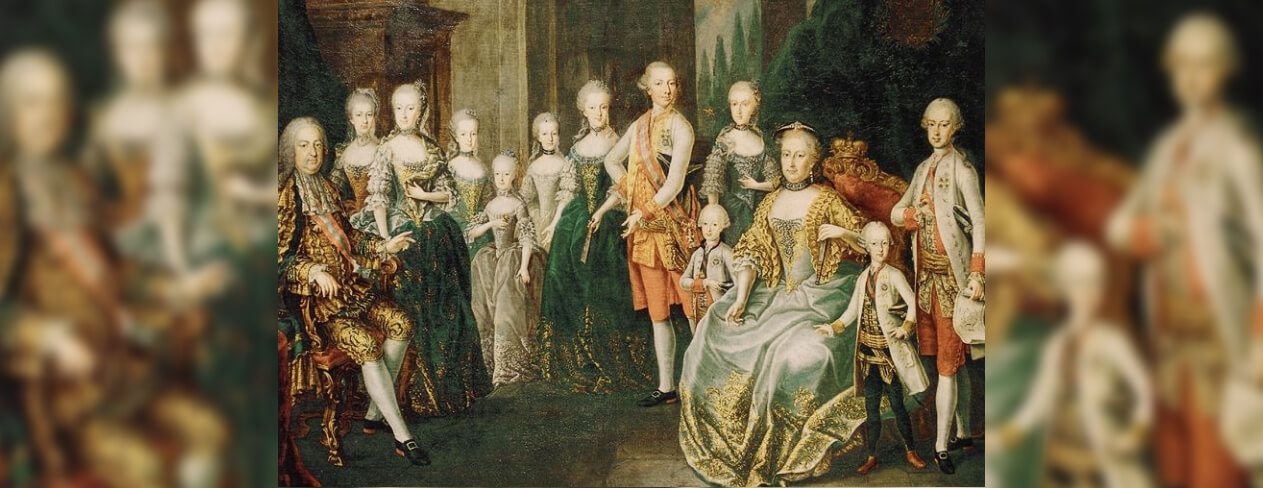
One important thread running through the narrative is Marianne’s tense relationship with her mother. To untangle this web of contradictory feelings and, ideally, to find their cause, was one of the keen aims of my research. From the very beginning, it was clear that without understanding the dynamics of this essential bond between mother and child, the protagonist’s character and motives could not be adequately interpreted.
Empress Maria Theresa was undoubtedly a model mother for her time, with many progressive views on healthcare and education. Yet, above all, she was a politician. Burdened with affairs of state, she could scarcely find time for each individual among her ever-growing flock of children. Even worse, her openly expressed partiality towards some of them fostered bitter rivalries between the siblings that persisted into their adult years.
Marianne, the eldest surviving daughter, had the misfortune to be the least beloved of all Maria Theresa’s children, virtually excluded from any experience of motherly affection. Needless to say, this sad reality largely determined her prospects and opportunities in life. Out of compassion, I let her gradually come to understand the roots of this maternal bias. At least that small measure of emotional relief I could offer my protagonist.
Access to the Metatext via placing an order for an augmented product. See Terms of Use
We use cookies to ensure that we give you the best experience on our website. If you continue to use this site we will assume that you are happy with it.