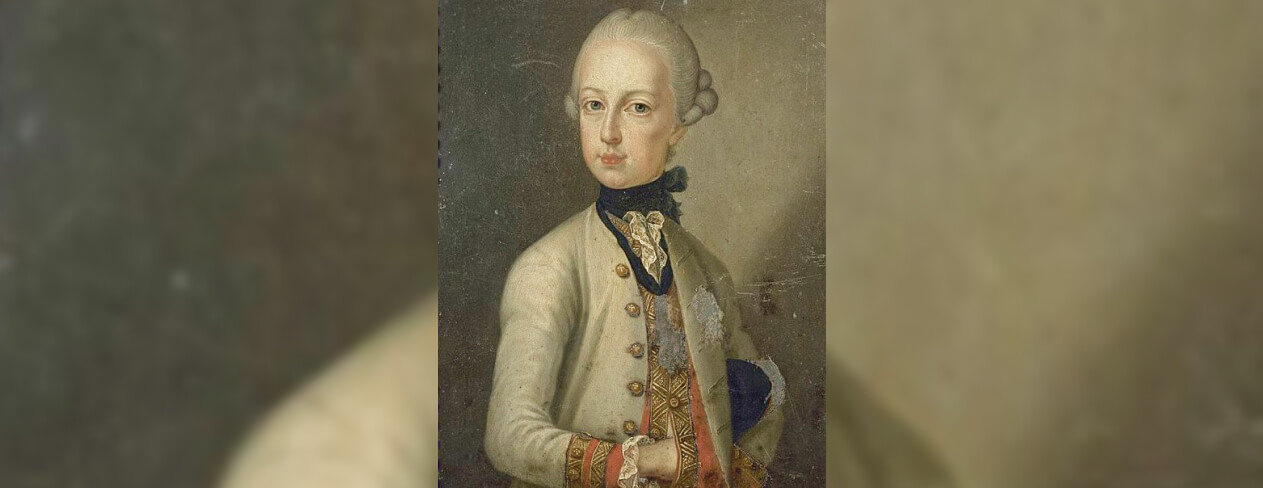
Archduke Joseph, the future Emperor Joseph II, was born on 13 March 1741. He was the firstborn son of Maria Theresa and Francis Stephan.
In retrospect, when the significant roles of mother and son in history are widely recognised, it is rather difficult to comprehend the vital importance of this event. During the few months between the death of Emperor Charles VI and the birth of Joseph, the fate of the dynasty was hanging by a thin thread. According to the Pragmatic Sanction, Maria Theresa was the heir to the Habsburg lands, but her prospects of actually enforcing her hereditary rights seemed more than questionable. A hostile alliance threatened Austria, the Prussian army invaded Silesia, and the partition of the Habsburg Monarchy seemed to be only a matter of time. The young queen, inexperienced in politics and in a delicate condition, found her realm militarily and financially unprepared for war, and herself with rather little support from her closest advisers.
In that seemingly hopeless situation, the birth of Joseph seemed like a divine miracle not only for his parents and the court, but for the whole country. After three daughters, the mere existence of a male heir allowed Maria Theresa to present herself as the regent safeguarding her father’s inheritance for her son. The general relief was enormous and was celebrated lavishly.
Four years – and another two daughters – later, another son, Charles Joseph, secured the potential succession of the dynasty. Over the years, another three sons followed, including Leopold, who became the ancestor of all the Habsburgs living today.
Access to the Metatext via placing an order for an augmented product. See Terms of Use
We use cookies to ensure that we give you the best experience on our website. If you continue to use this site we will assume that you are happy with it.