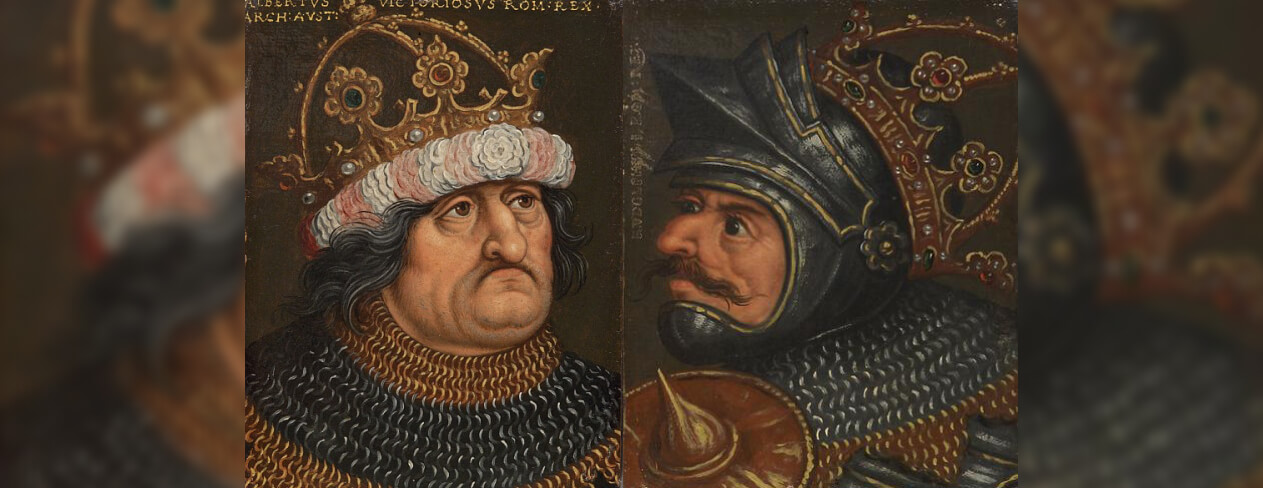
Coming from a relatively minor noble family, he distinguished himself through remarkable military leadership and a pragmatic yet fair character. During the Great Interregnum — the turbulent period following the fall of the House of Hohenstaufen — his clear-sighted statesmanship and strategic skill brought him to power. Rudolf’s election as King of the Romans in 1273 ended decades of instability and division among rival princes. He was able to reassert imperial authority and, above all, defeat the powerful Ottokar II of Bohemia, who was in the process of building an empire-like realm of his own. By securing Austria, Styria, and Carinthia, Rudolf laid the foundation for the dynasty’s steady rise and consolidation in the centuries that followed.
Rudolf’s marriage to Gertrude of Hohenberg produced ten children, whose own marriages created an extensive family network throughout the German lands. True, they sometimes brought family feuds as well. Rudolf’s eldest son and successor as King of the Romans, Albert I of Germany, was treacherously murdered by his young nephew. By a strange coincidence, this happened on the ninetieth anniversary of his father’s birth — 1 May 1308.
Access to the Metatext via placing an order for an augmented product. See Terms of Use
We use cookies to ensure that we give you the best experience on our website. If you continue to use this site we will assume that you are happy with it.