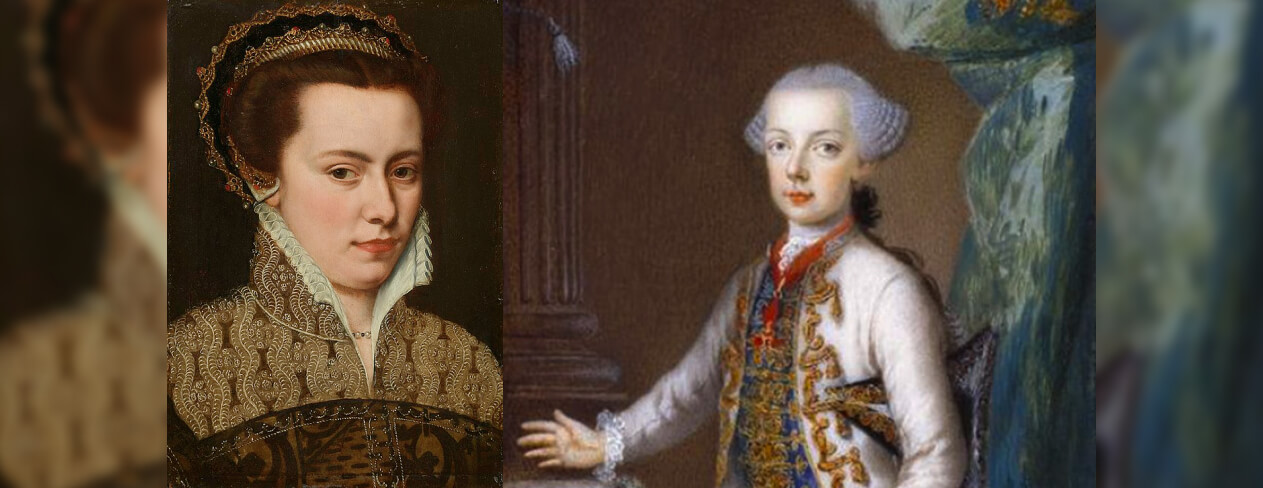
On 18 January 1586, Margaret of Parma, the illegitimate daughter of Emperor Charles V, passed away.
She belonged to the constellation of politically active Habsburg princesses who served as governesses of the Netherlands in the sixteenth century. Following the model set by Margaret of Austria and continued by Maria ofHungary— Charles V’s aunt and sister, respectively — the widowed Margaret of Parma assumed the position on behalf of her half-brother Philip II of Spain, although her authority was rather limited. During her tenure, she had to face serious opposition from the Dutch nobility to Spanish rule. Objecting to Philip’s harsh military measures, she resigned and spent her final years advising and counselling her son Alessandro Farnese, the new governor.
Nearly two centuries later, on 18 January 1761, Maria Theresa and Francis Stephen lost their second-born son, Archduke Charles Joseph, shortly before his seventeenth birthday.
He was said to have been the Empress’s favourite son — easy-going, cheerful, and always ready for pranks. Although he had previously survived smallpox, a disease often lethal at the time, he succumbed to a sudden fever. Charles Joseph’s death marked the beginning of a difficult period for the Imperial family: over the following years, a fatal disease afflicted six further members of the dynasty, four of whom did not survive.
Access to the Metatext via placing an order for an augmented product. See Terms of Use
We use cookies to ensure that we give you the best experience on our website. If you continue to use this site we will assume that you are happy with it.