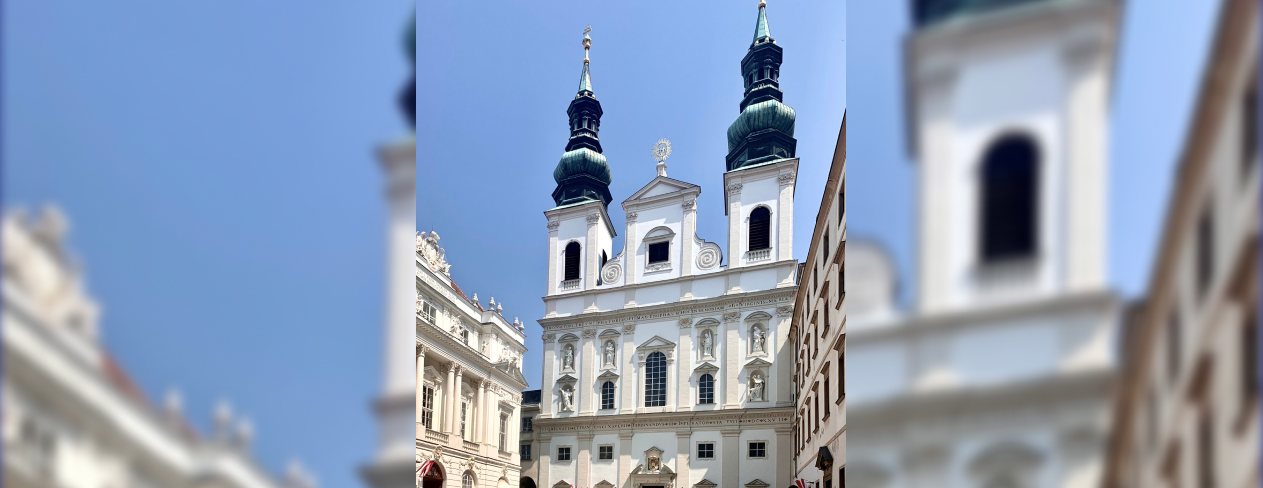
When trying to enter the spirit of a historical period or to grasp what sort of ideas were in the air, an author or historian should begin by understanding what people commonly read. Religious instruction, moral guidance, intellectual nourishment and popular novels — all kinds of books that shaped people’s mental world. So, about a week after Archduchess Marianne’s near-fatal illness, we find her organising her book cabinet.
During this quiet activity, she receives another visit from her confessor, the Jesuit priest Father Franz (1712–1788). The House of Habsburg had traditionally close ties with the Jesuits, who, among other responsibilities, were in charge of educating the Imperial children. In 1748, Father Franz was appointed confessor to the ten-year-old Marianne. I cannot help suggesting that his two-volume Geistliche Übungen (Spiritual Exercises) was written with the spiritual guidance of his Imperial pupil in mind, which is why I allowed Marianne to have the book in her cabinet.
Nothing is known about Father Franz’s personality, and thus his portrayal in the narrative is entirely fictional. Marianne surely needs a confidant for her spiritual and emotional growth and, of course, her intellectual pursuits. This is why I depict the Father’s character as mild, open-minded and patient — a pleasant companion and a trustworthy mentor to Marianne.
Access to the Metatext via placing an order for an augmented product. See Terms of Use
We use cookies to ensure that we give you the best experience on our website. If you continue to use this site we will assume that you are happy with it.