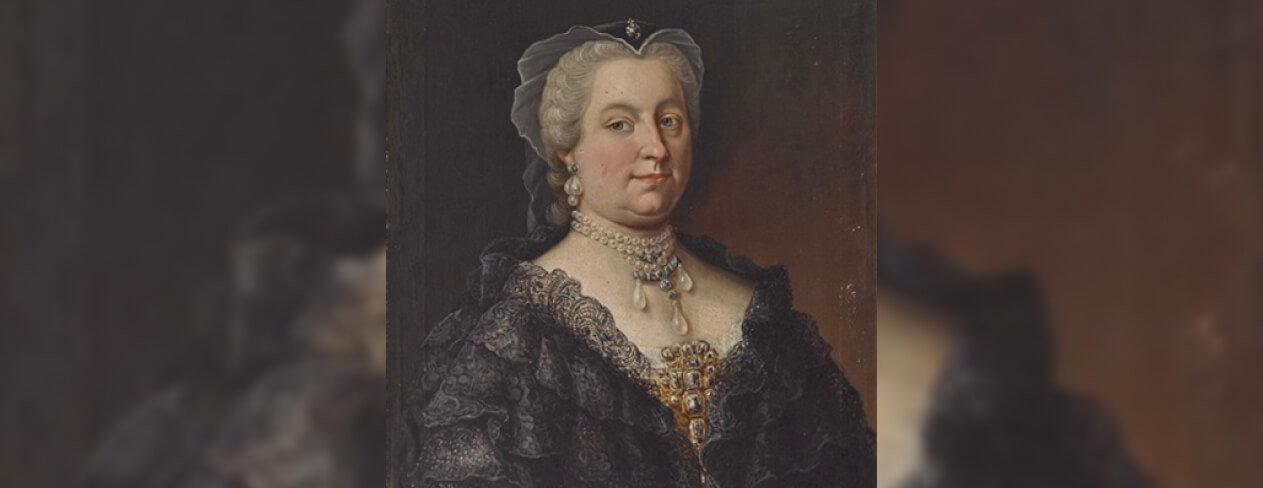
Empress Maria Theresa died on 29 November 1780. Without doubt, it was one of the most significant events in the Habsburg family’s calendar in the entire eighteenth century.
Earlier that month, the Imperial court was preparing for its annual departure from Schönbrunn Palace to move to the Hofburg for the winter season. The sixty-three-year-old Empress had long suffered from poor health, experiencing shortness of breath and coughing (likely asthma), heart failure, hypertension, and rheumatic pain. Despite these troubles, she chose to attend an after-hunt meal at the Gloriette, the pavilion on the hilltop opposite Schönbrunn, on the last day of their stay. The weather happened to be damp and chilly, and she caught a cold.
Upon returning to the Hofburg, Maria Theresa’s condition deteriorated rapidly. She developed a high fever and was diagnosed with pneumonia. After a couple of weeks, her state became critical. Soon, there was no doubt that the Empress was dying. Her children who resided in Vienna gathered at her bedside to witness her receiving the Last Ointment. A detailed account of her final hours was recorded by her eldest daughter, Archduchess Marianne.
Maria Theresa died around 9 p.m. in her bedroom in the Leopoldine Wing of the Hofburg, wrapped in the old dressing gown once owned by her beloved husband, Emperor Francis Stephan. She was laid to rest in the Imperial Crypt of the Capuchin Church in Vienna, in a double sarcophagus beside Francis Stephan.
Access to the Metatext via placing an order for an augmented product. See Terms of Use
We use cookies to ensure that we give you the best experience on our website. If you continue to use this site we will assume that you are happy with it.