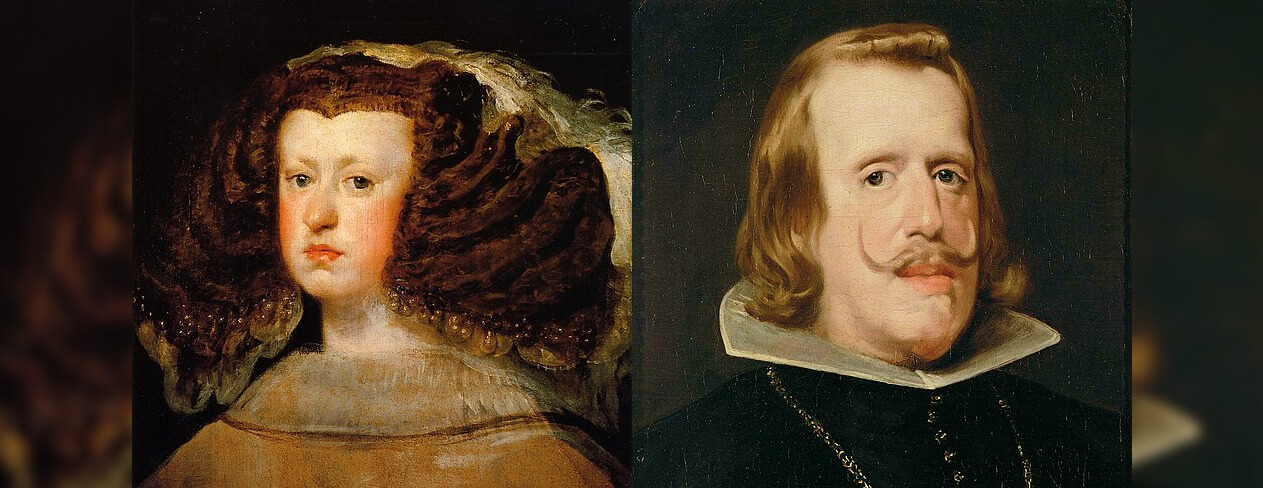
Archduchess Maria Anna and King Philip IV of Spain were married on 7 October 1649.
Maria Anna was originally intended to marry Balthasar Charles, Prince of Asturias. Unfortunately, the young prince died, leaving Philip without his only son and Maria Anna without a bridegroom befitting her rank. The dynastic plans were quickly revised: instead of becoming Philip’s daughter-in-law, Maria Anna became his wife, taking the name Mariana as Queen of Spain.
Their union was one of the Habsburgs’ traditional uncle–niece marriages, but this time the consequences were particularly tragic. Instead of securing the family’s continuation, the marriage produced only one surviving son, the unhappy Carlos II. The list of illnesses and physical impairments attributed to him is truly distressing to read. Although not every detail of his condition has been confirmed, his frailty must have caused Mariana great distress. Moreover, Carlos’s inability to father an heir led to the extinction of the Spanish Habsburg line, followed by the devastating War of the Spanish Succession, fought from 1701 to 1714.
Queen Mariana was spared witnessing the final collapse. She died in 1696, aged sixty-one, having served as regent during her son’s minority and continuing to play a significant role in the government during his reign.
Access to the Metatext via placing an order for an augmented product. See Terms of Use
We use cookies to ensure that we give you the best experience on our website. If you continue to use this site we will assume that you are happy with it.