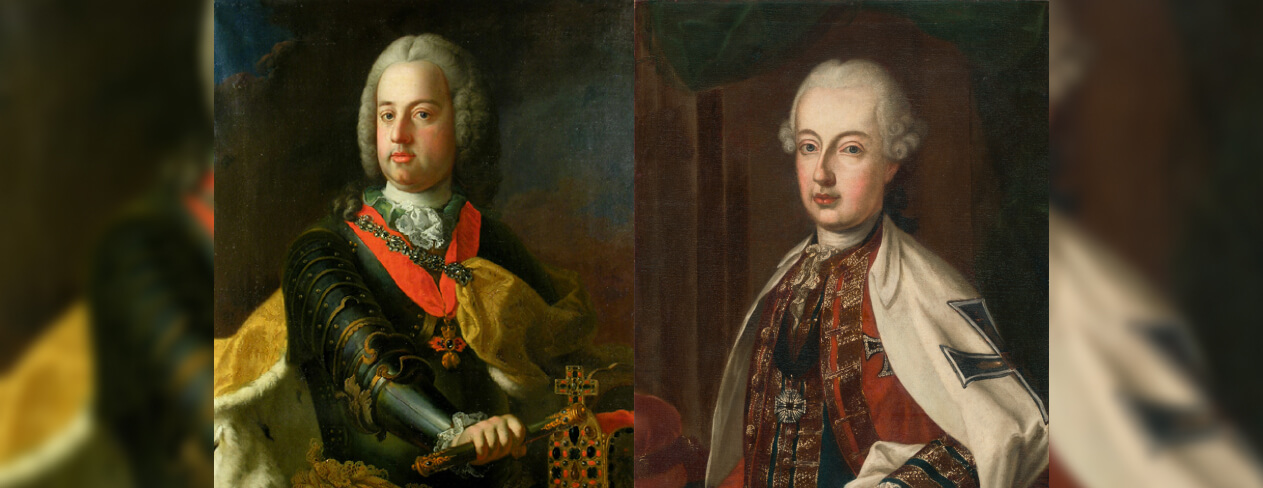
Francis I Stephan, the Holy Roman Emperor, was born on 8 December 1708. In his youth, he was expected to inherit the Duchy of Lorraine one day. Instead of that rather modest destiny, he became the husband of Maria Theresa and the highest sovereign of the Western world. In history books, Francis Stephan has long been somewhat overshadowed by the Empress’s political excellence.
However, historical sources unanimously describe Francis Stephan as an exceptionally amiable personality. He was a loving father to his many children, feeling especially close to his eldest daughter, Maria Anna, my protagonist. His marriage to Maria Theresa and their private life were considered happier than most noble unions of the era.
Despite lacking political and military influence, Francis Stephan had a genuine talent for economic and financial matters. He advised the Empress on taxation and state finances and eagerly fostered industry and trade. Deeply interested in science and new inventions, he himself founded numerous manufactories. In the 18th century, such activity was not much appreciated in noble society, yet it secured the Emperor a remarkable personal income — one that remains the basis of the Habsburgs’ private fortune to this day.
For his forty-eighth birthday, Francis Stephan received an exceptional gift: Maximilian Franz, the fifth son and last child of the Imperial couple, was born on 8 December 1756. He later became Grand Master of the Teutonic Knights.
Access to the Metatext via placing an order for an augmented product. See Terms of Use
We use cookies to ensure that we give you the best experience on our website. If you continue to use this site we will assume that you are happy with it.