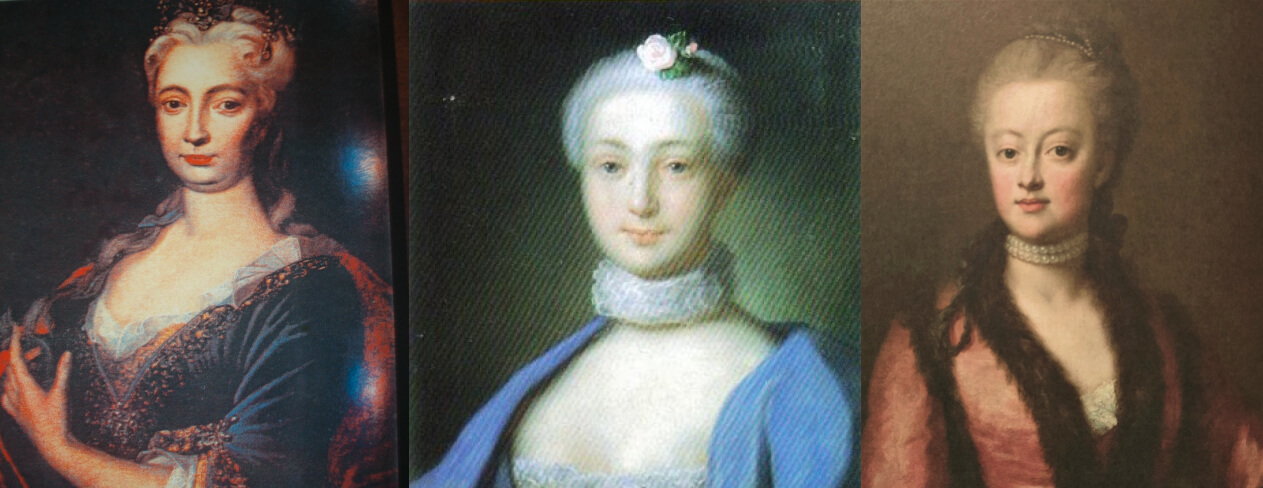
Despite the somewhat sensational opening, one should not expect great scandals. Throughout the centuries, the Habsburgs showed themselves to be relatively decent and restrained in matters of romance and morality — quite the opposite of the kings of France. The rather institutionalised practice of having a maîtresse-en-titre at Versailles was unknown in Vienna and, in the time of Maria Theresa, even unthinkable.
Nevertheless, the Habsburg monarchs were human beings of flesh and blood, with their own affections and sympathies. Some of them, like Maximilian I or Charles V, had a few illegitimate children; others, such as Ferdinand II of Further Austria, Archduke Johann, or Archduke Franz Ferdinand, entered into morganatic marriages with women of their own choosing and fathered legitimate, though non-dynastic, offspring.
In 1757, when the narrative unfolds, Archduchess Marianne probably remembered Maria Anna Josepha (or Giuseppina) Princess Pignatelli, her grandfather Charles VI’s favourite and confidante, who had died a few years earlier. She surely knew Maria Wilhelmine, Princess Auersperg, who was whispered — though never confirmed — to have been in a liaison with Emperor Francis Stephen. She may also have met the young Maria Eleonore von Oettingen-Oettingen, later Princess Liechtenstein by marriage, who in later years became the romantic interest of Emperor Joseph II.
Access to the Metatext via placing an order for an augmented product. See Terms of Use
We use cookies to ensure that we give you the best experience on our website. If you continue to use this site we will assume that you are happy with it.